 PhysioActive SG
 Appointments
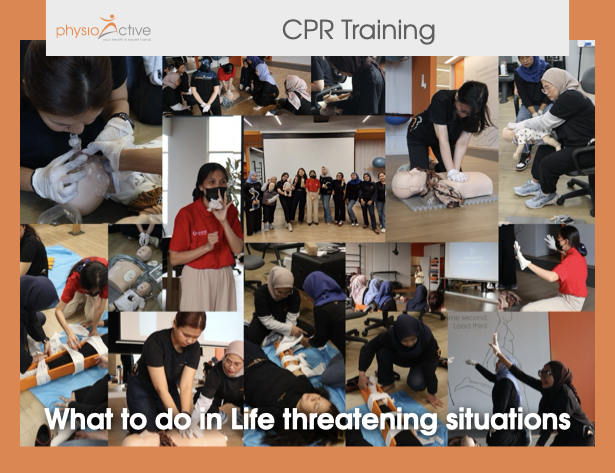
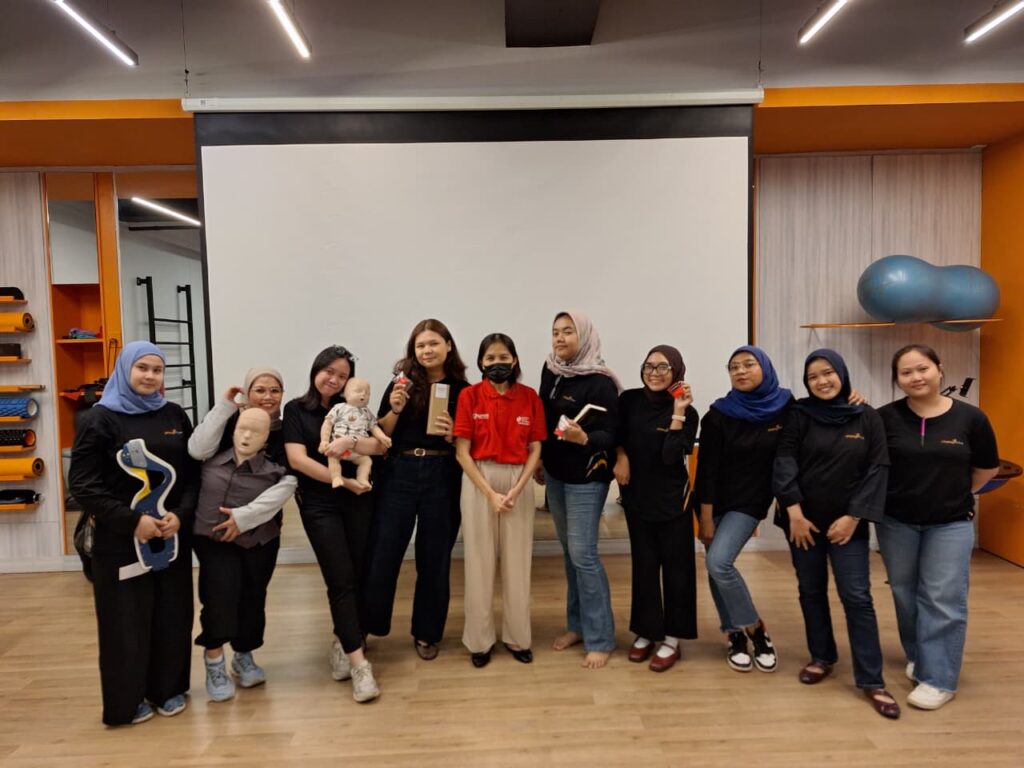
CPR (Cardiopulmonary Resuscitation) training is an essential part of ensuring all Physioactive staff understand the proper first aid steps to handle emergency situations. On Sunday, November 30, the Reception and Housekeeping teams participated in CPR Training and First Aid with Summit Healthcare. The training was delivered by an expert, Dr. Minawati.
This training provided important insights and skills so that all staff are prepared to face emergency conditions, especially during heart attacks and cardiac arrest, as well as first aid for choking, injuries, wounds, seizures, and strokes.
What Did the Physioactive Team Learn?
This training focused not only on theory but also on direct simulation using mannequins and AED (Automated External Defibrillator) devices, as well as the use of splints for fracture cases. What exactly did the Physioactive team learn?
1. Recognizing Emergency Conditions
The first thing learned was understanding the difference between cardiac arrest and heart attack. The first step is to check consciousness and pulse. There are several pulse points that can be checked: the wrist, neck, thigh, and arm area. If there is no response, immediately call for help by asking someone to call 119 and bring an AED.
2. Compression Techniques / CPR and Use of AED (Automated External Defibrillator)
CPR is performed when someone experiences cardiac arrest. Compressions must not be done carelessly. Here’s what to pay attention to during chest compressions:
- Position must be correct (be at the side with knees aligned with the shoulders)
- Place hands on the chest with one hand stacked on top of the other
- Loosen clothing around the neck and chest
- Compress at 100-120 per minute with a depth of 5-6 cm for adults, 4 cm for babies and children
- Use of AED (if available) following the device’s voice instructions
- Place pads in the correct position
- Keep distance by not touching the body when the AED is delivering an electric shock
3. First Aid
In addition to CPR and AED, the Physioactive team was also equipped with first aid knowledge for conditions such as:
Choking – Choking is commonly experienced by everyone and can happen at any time. The first treatment for someone choking is to ask for help, give 5 blows to the back between the shoulder blades with the person bent forward. For babies, the head position must be lower than the feet. If someone, whether adult or baby, chokes until losing consciousness, perform CPR or chest compressions.
Fractures – At Physioactive, fracture complaints are not uncommon, but what if we encounter someone who has just experienced a fracture? We can use a splint to reduce movement in the fractured area.
Seizures – If you see someone having a seizure, the steps to take are to move away objects around them to protect them from physical harm, ensure the airway is clear until the seizure stops. Usually seizures last up to 5 minutes; if more than 5 minutes, call medical personnel and ask for help. However, if the seizure has stopped, turn the patient’s body to the side to help fluid come out of the mouth and keep the airway open.
Stroke – Time is critical for brain treatment; the faster medical treatment is received, the faster recovery and reduced brain damage because stroke damages nerves in the brain. Recognize stroke symptoms with F.A.S.T (Face, Arms, Speech, Time). Look at their face; usually stroke is marked by one side of the face being numb so the smile is not symmetrical. Then check arms, whether one arm is weak and immediately falls down. Also check speech; usually stroke patients have difficulty speaking. If you see several of these signs, immediately contact medical personnel or emergency services and don’t forget to note the time when the first symptoms appeared.
Burns and Bleeding Wounds – There are 2 types of burns: burns from cold or burns from heat. Generally marked by skin that feels sore and red and characterized by blisters containing water. The first treatment for wounds like this is to let the wound be exposed to running water to reduce the temperature on the burned skin, then apply antibiotics and hydrogel. For bleeding wounds, if blood flows heavily or even spurts, immediately cover the wound with cloth so blood doesn’t continue to come out. Immediately ask for help and contact emergency services.
What Are the Benefits of This Training?
As Physioactive’s frontline, the reception and housekeeping teams don’t just arrange schedules, welcome patients, and maintain clinic cleanliness. They all play an important role in ensuring safety in the clinic environment and surrounding areas. With this training, our entire team now has the preparation to act quickly and calmly in emergency situations, not just relying on therapists alone.
In cardiac arrest cases, every second is precious. Knowledge and training about CPR is very beneficial in emergencies while waiting for medical help to arrive.
Next Steps: Investment in Safety
Physioactive always supports the entire team to develop. We hope all Physioactive team members are always prepared and confident in helping others. We believe this training is an important investment in building a safe and supportive environment for both patients and staff. To continue improving emergency preparedness, we hope it doesn’t stop here; there are still many ways to improve the skills of Physioactive members, such as Communication Training, Evacuation and Disaster Management Training, and Mental Health Awareness Training.
We extend our sincere thanks to Dr. Minawati and Summit Healthcare for this very informative and beneficial training.