 PhysioActive SG
 Appointments
Cervical Myelopathy : Symptoms and Warning Signs to Act On
Cervical myelopathy Dr Chua Soo Yong discusses is one of the most serious spinal conditions — and one of the most misunderstood. Clumsy hands, poor balance, and unexplained numbness are not just signs of ageing. In this edition of Physioactive’s Singapore Surgeon Insights series, Dr. Chua Soo Yong explains what you need to know about cervical myelopathy before it is too late.
Dr. Chua Soo Yong shares his expertise on how cervical myelopathy develops, why it is so often discovered late, and why surgery combined with physiotherapy is key to the best possible recovery.
What Is Cervical Myelopathy? Dr Chua Explains
The term “cervical myelopathy” breaks down simply: cervical refers to the neck, myelo means spinal cord, and pathy means sick or damaged. In other words, cervical myelopathy means the spinal cord in your neck is being compressed and damaged.
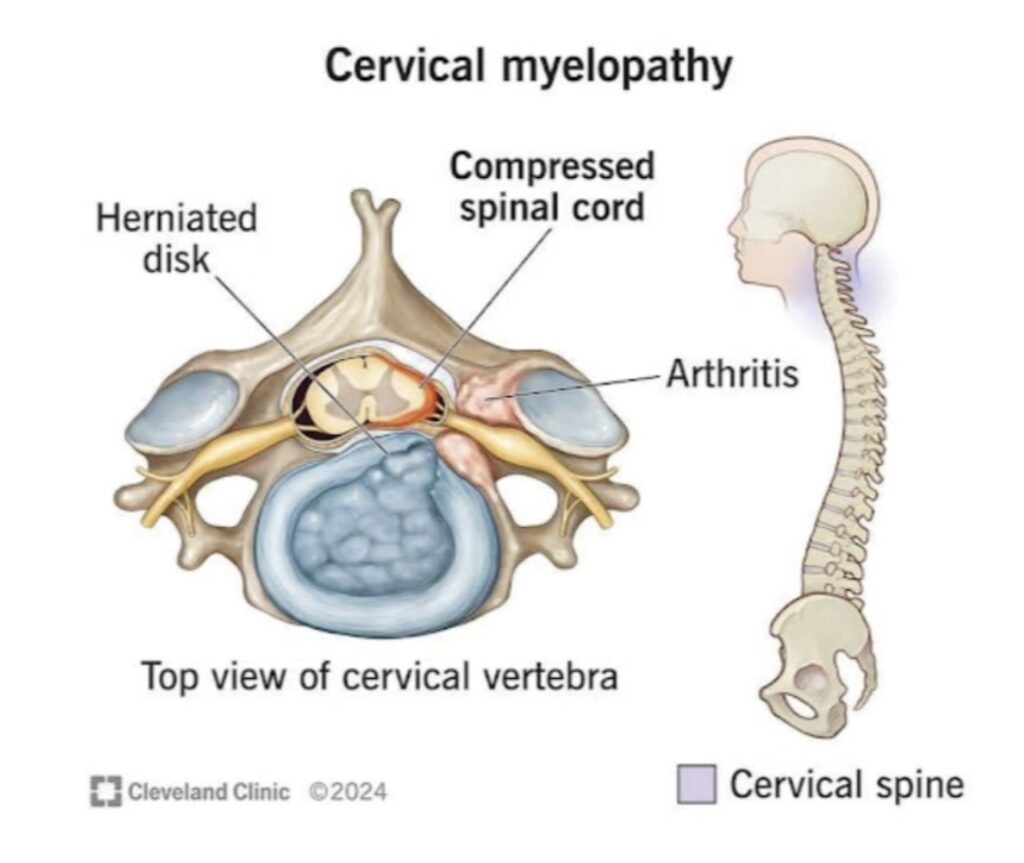
Unlike a pinched nerve or general neck pain, cervical myelopathy affects the spinal cord itself — the most critical structure in the entire spine. Once the spinal cord is damaged, the consequences can be irreversible. This is what makes cervical myelopathy the most serious of all degenerative spinal conditions.
Symptoms: Why Cervical Myelopathy Is So Often Missed
One of the most dangerous aspects of cervical myelopathy is that pain is not a dominant symptom — especially in the early stages. Patients often experience:
- Vague numbness or heaviness in the arms and hands
- Difficulty with fine motor tasks — dropping objects, struggling with chopsticks or a pen
- Reduced hand dexterity
- Poor balance when walking
- Frequent unexplained falls
Because these symptoms can be mistaken for normal ageing or fatigue, many patients delay seeking treatment. Dr. Chua warns that this delay can be costly: “Once you hit the slippery slope, the patient’s condition gets worse and worse.”
Why Early Diagnosis of Cervical Myelopathy Matters
Dr. Chua Soo Yong uses a powerful analogy to explain the urgency: if you compress the spinal cord long enough, its cells begin to die — and unlike other tissues, spinal cord cells do not regenerate. Every week of delay narrows the window for a meaningful recovery.
He recalls one patient — a businessman — who arrived in a wheelchair, so weak he could not sign his own name. A thumbprint was used to obtain his surgical consent. After a multi-level cervical spine decompression, the patient progressed from a wheelchair to walking with a stick, and eventually to near-normal walking. But Dr. Chua is clear: “Most patients who are discovered late never recover full function.”
Surgical Treatment Options for Cervical Myelopathy
Surgery is the only effective treatment for cervical myelopathy. The goal is to decompress the spinal cord and prevent further damage. Dr. Chua outlines two main surgical approaches:
- Anterior (front) approach: Suitable for younger patients with one or two affected levels. The damaged disc is removed and replaced with an implant and cage to free up the spinal canal.
- Posterior (back) approach: Preferred for older patients or those with multiple affected levels. The back of the spine is opened to relieve pressure and screws are placed to stabilize the neck.
Hospital stay is relatively short — one to two days for simpler cases, up to a week for more complex multi-level surgery. For patients travelling from Indonesia, Dr. Chua recommends staying in Singapore for one to two weeks post-surgery to allow for wound checks and initial recovery monitoring.
The Role of Physiotherapy: Before and After Cervical Myelopathy Surgery
This is where Physioactive plays a critical role in your recovery journey. Learn more about our physiotherapy services and why patients choose Physioactive for post-surgical rehabilitation. Dr. Chua emphasizes that physiotherapy is essential both before and after surgery:
Pre-operative physiotherapy improves your baseline strength and physical condition before surgery. “Surgery is an insult to the body,” Dr. Chua explains. “If you start strong, you recover faster. If you’re already starting from poor, there’s a huge hill to climb.”
Post-operative physiotherapy helps patients regain functional strength, balance, coordination, and — for those with pre-existing spinal cord damage — fine motor dexterity. The earlier rehabilitation begins after surgery, the better the outcome.
Don’t Wait — Act Now
Cervical myelopathy is a condition where waiting works against you. If you or someone you know is experiencing unexplained clumsiness, hand weakness, or balance problems, seek a specialist opinion early.
At Physioactive, our experienced physiotherapists work closely with surgeons like Dr. Chua Soo Yong to support patients through every stage — from pre-surgical conditioning to post-operative rehabilitation. The cervical myelopathy Dr Chua recommends addressing includes physical preparation before surgery and a structured rehabilitation programme afterwards. Explore our full range of physiotherapy services and take the first step toward recovery today.
Ready to Explore Your Treatment Options?
Dr. Chua Soo Yong
Atlas Orthopaedic Group Singapore
Website: https://www.aog.com.sg
Phone: (+65) 6262 0555
PhysioActive Singapore
Website: https://physioactive.sg/
Comprehensive rehabilitation and physiotherapy services
PhysioActive Indonesia
Website: https://www.physioactive.id/
Locations in Jakarta: Darmawangsa, Setiabudi, and Sunter
Expert post-surgical rehabilitation for spine patients