 PhysioActive SG
 Appointments
Ankle Cartilage Injury: Causes, Symptoms & Treatment
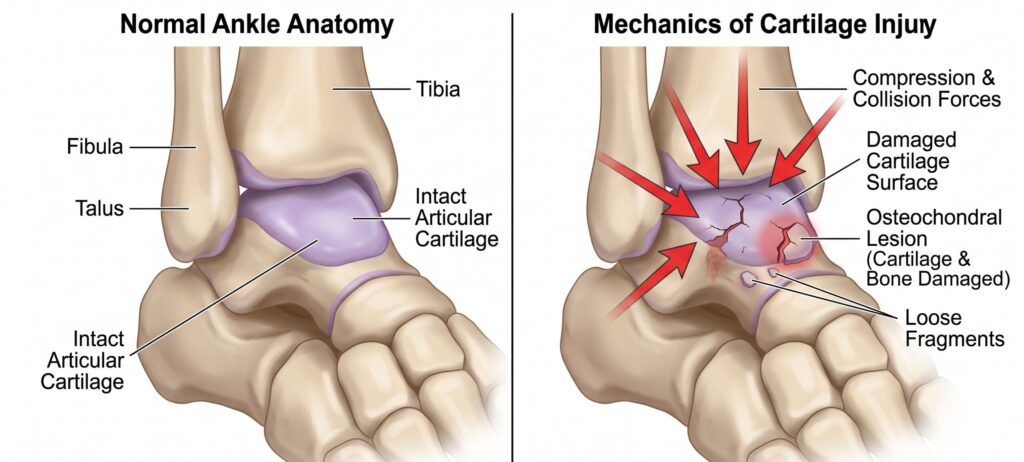
Persistent ankle pain is not always caused by a simple ankle sprain. One possible underlying problem is an ankle cartilage injury, which can sometimes be overlooked after an ankle injury.
In the Singapore Surgeon Insight Series, Dr. Chris Pierce, Consultant Orthopaedic Foot & Ankle Surgeon at Altius Clinic Singapore, explains the connection between ankle cartilage injuries, chronic ankle instability, diagnosis, treatment, and recovery.
What Is an Ankle Cartilage Injury?
An ankle cartilage injury can involve both the cartilage and the underlying bone, often referred to as an osteochondral lesion. These injuries commonly develop after trauma such as an ankle fracture or ankle sprain.
A severe inversion or eversion injury can cause the bones inside the ankle joint to collide, potentially damaging the cartilage and underlying bone.
According to Dr. Chris, cartilage has limited healing potential, particularly in adults. This is why persistent symptoms should be properly assessed rather than ignored.
What Are the Symptoms?
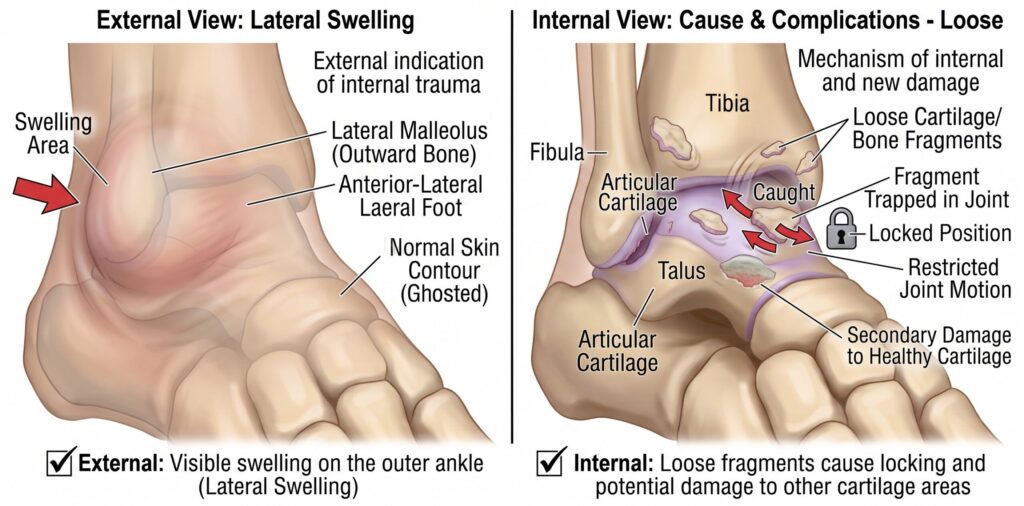
Possible signs of an ankle cartilage injury include:
- Persistent ankle pain.
- Swelling after activity.
- A feeling of ankle instability.
- Pain during certain activities.
- Locking or catching inside the joint.
If a loose cartilage or bone fragment develops inside the joint, it may cause the ankle to lock and potentially affect other areas of cartilage.
How Is It Related to Ankle Instability?
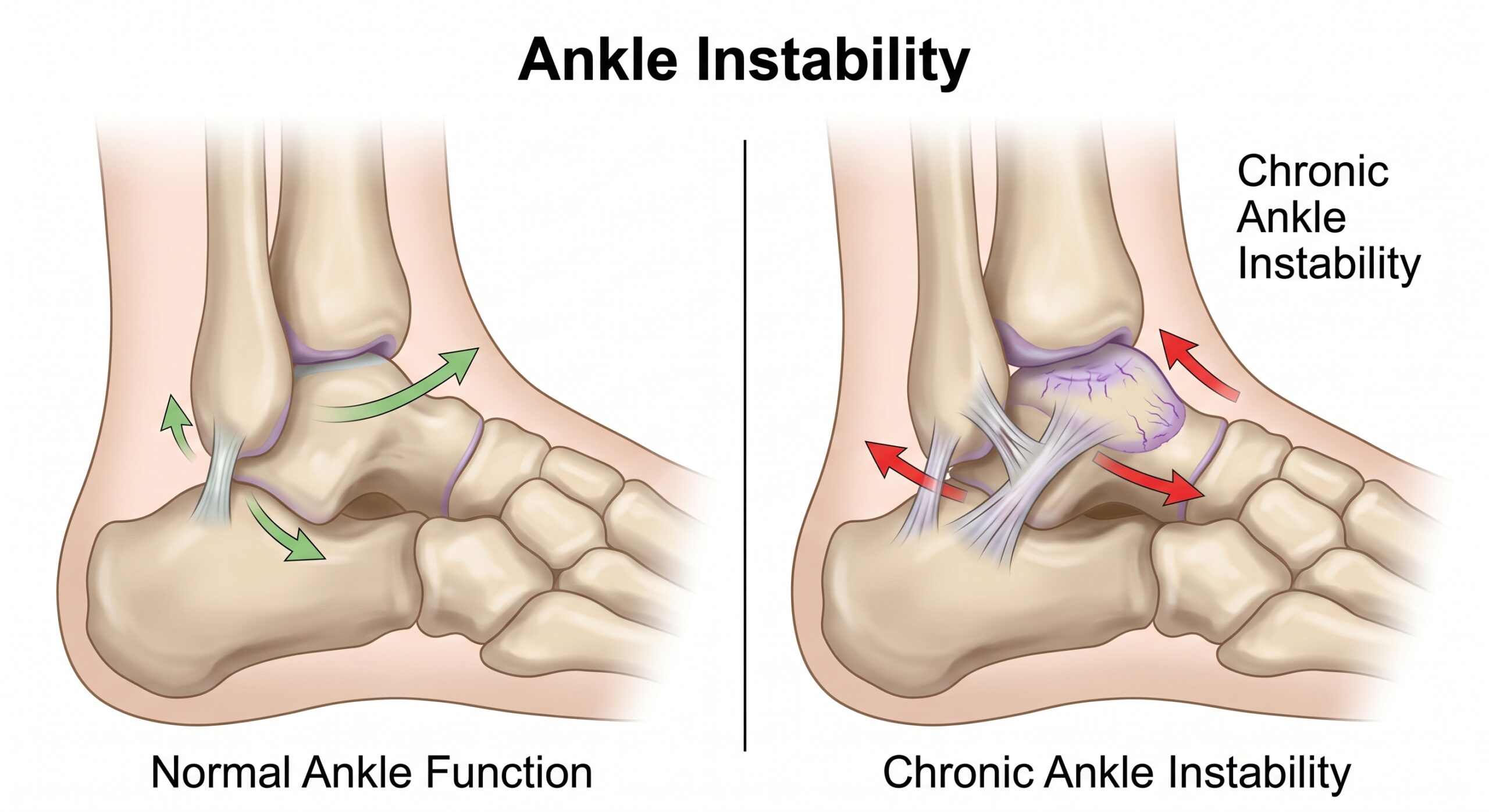
Chronic ankle instability can involve more than simply feeling that your ankle may “give way.” Long-term instability can cause abnormal movement of the ankle bones and place unusual stress on the cartilage.
This means patients with repeated ankle sprains and ongoing pain may need their ankle stability assessed as well as the original injury.
When Should You Get Your Ankle Checked?
Not every ankle sprain requires an MRI or surgery. Dr. Chris explains that ligament assessment can be more useful several days after an injury, once acute swelling and tenderness have reduced.
Further assessment may be recommended if there is significant pain, difficulty walking, persistent swelling, or limited progress during rehabilitation.
An MRI may be used to assess structures inside the ankle when necessary.
How Is Ankle Cartilage Injury Treated?
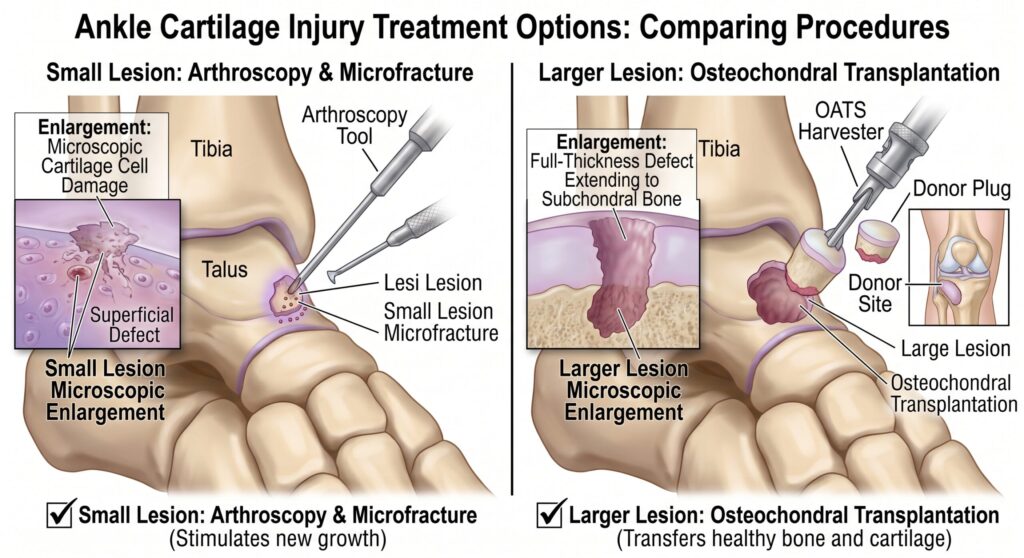
Treatment depends on the size and condition of the cartilage lesion. Smaller lesions may respond well to procedures such as ankle arthroscopy and microfracture.
Larger lesions may require more advanced procedures, including osteochondral transplantation. However, surgery is not automatically required for every patient. Treatment should be based on the individual’s symptoms, lesion size, ankle stability, and activity goals.
What Is Recovery Like?
In the example discussed by Dr. Chris, a patient undergoing microfracture and ligament repair may use crutches for around 10–14 days, followed by several weeks in a walking boot.
Physiotherapy may begin from around two weeks. Straight-line running may be possible at approximately three months, while sports involving changes of direction or uneven surfaces may require around four months.
These timelines are general examples and can vary depending on the individual. A structured rehabilitation programme is important for restoring strength, mobility, and ankle stability.
Conclusion
Ankle cartilage injury can be an underlying cause of persistent ankle pain, particularly when combined with chronic ankle instability or repeated ankle sprains.
Early and appropriate assessment can help determine whether a patient needs physiotherapy, further imaging, or surgical treatment. As Dr. Chris Pierce highlights, patients with suspected cartilage problems should consider seeing a specialist with specific experience in ankle cartilage and instability.
Ready to Explore Your Treatment Options?
Altius Clinic Singapore – Dr. Chris Pierce
Website: https://altiusclinic.sg/
Tel: +65 6970 1518
WhatsApp: +65 8500 3961
PhysioActive Singapore
Website: https://physioactive.sg/
Comprehensive rehabilitation and physiotherapy services
PhysioActive Indonesia
Website: https://www.physioactive.id/
Locations in Jakarta: Darmawangsa, Setiabudi, and Sunter
Expert post-surgical rehabilitation